A hop and a skip off the 7 train in Sunnyside sits an unassuming little blue restaurant that feels less like a business and more like being adopted into Halim and Amina’s family for three hours. Kasbah Cafe doesn’t have flashy branding, just a quiet confidence that somehow makes you trust it immediately.
Before I could even fully introduce the concept of Kul, Halim immediately switched into Arab host mode. Not the performative hospitality where someone asks if you’ve “dined with us before”. Real hospitality. The kind where refusal is not an option and your table starts mysteriously filling itself with food.
“I’m bringing you all the traditional dishes.” he told me before I even looked at the menu.
Kasbah Cafe Feels Like Being Welcomed Home
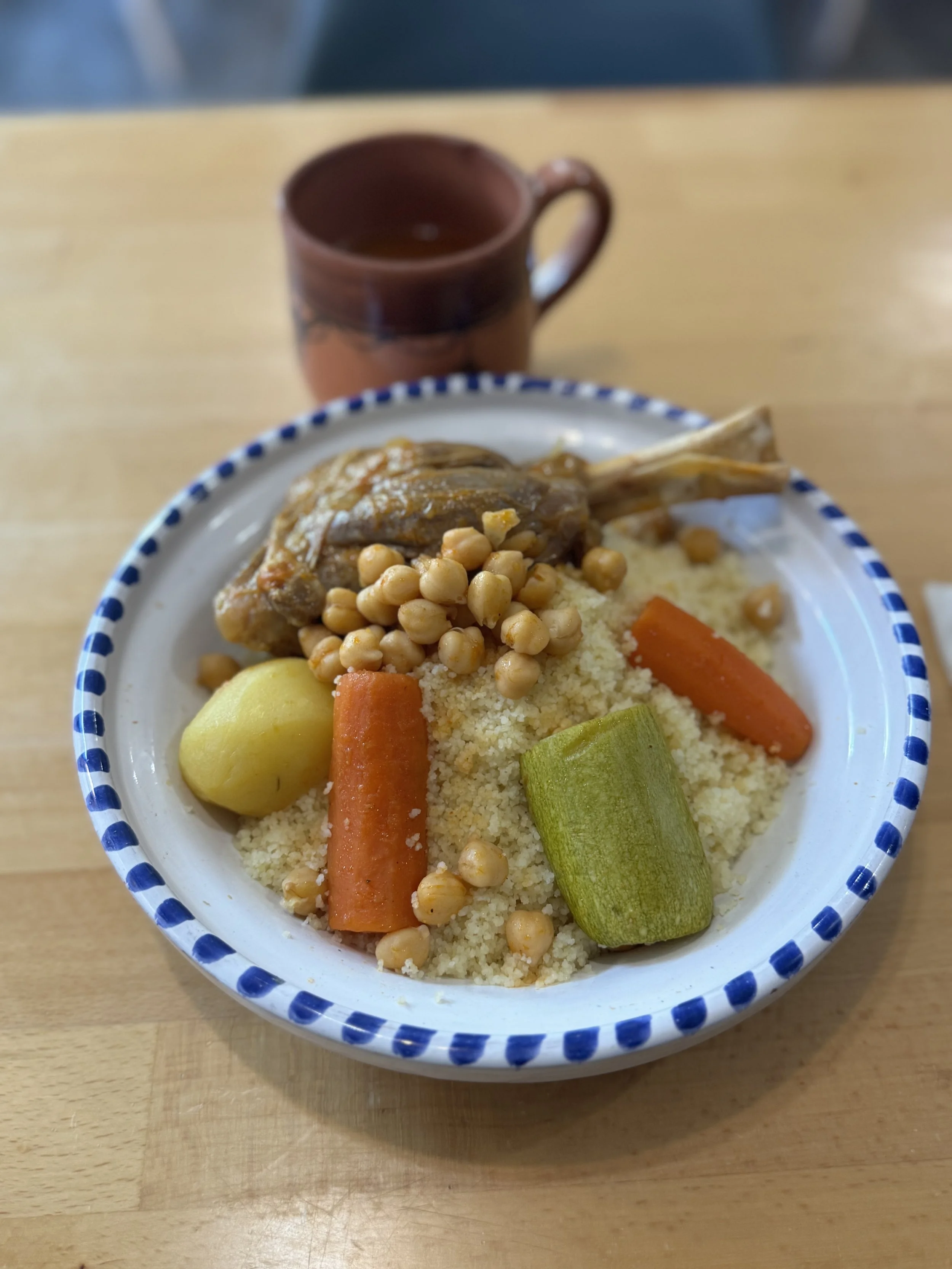
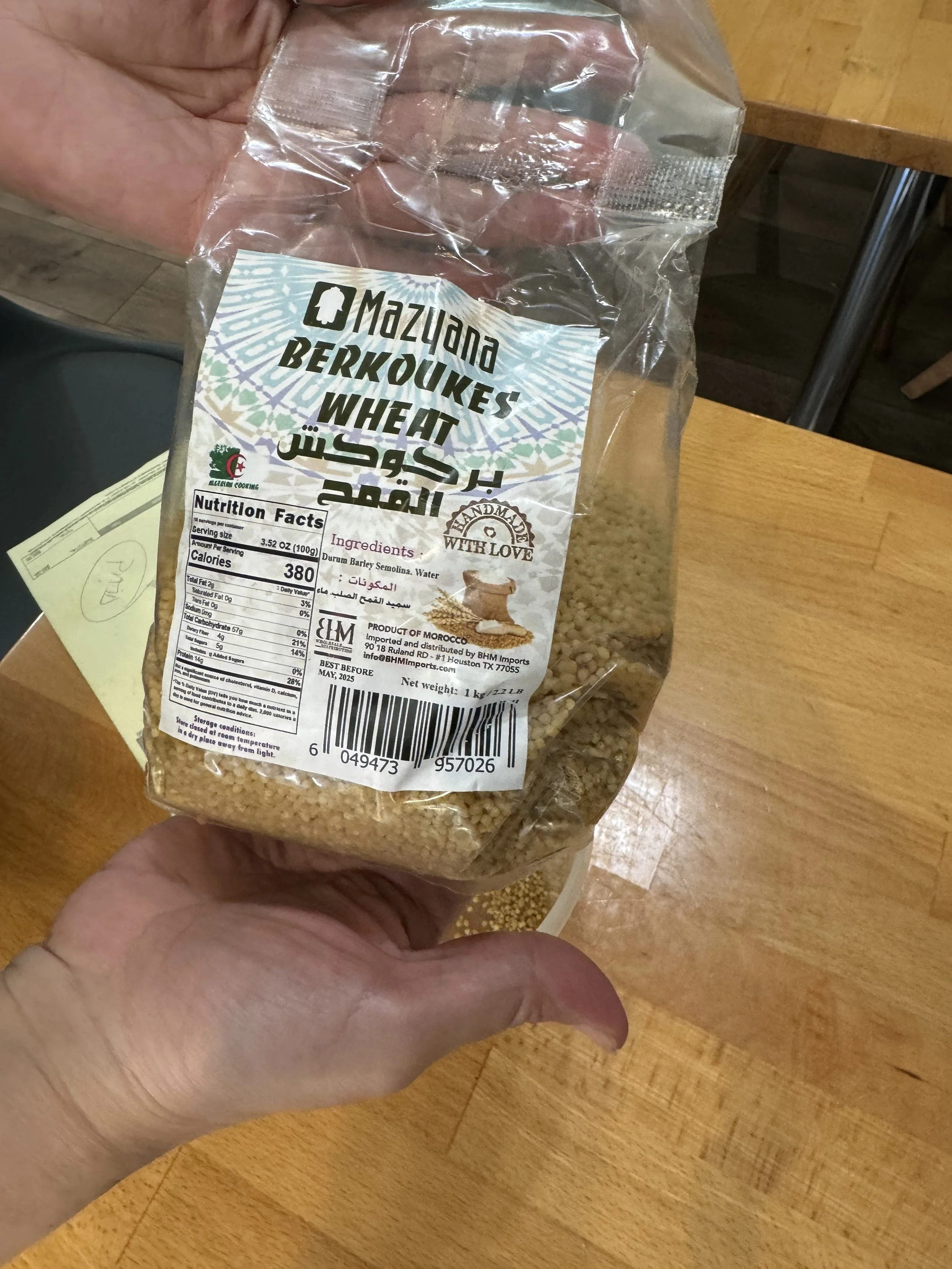
The first thing to arrive was the couscous, Algeria’s national dish. Amina explained that there are 58 different provinces in Algeria and over 200 different ways to prepare couscous, each one reflecting local traditions.
We ended up talking a long time about why Arab food isn’t as prominent in the city as you would expect, despite there being huge communities. So many Arab-owned restaurants brand themselves into broadly marketable “Mediterranean” concepts because they don’t believe people will buy truly traditional food. Familiarity becomes the strategy. Falafel and Shawarma are centered on every menu to create a safe entry point. Entire regional cuisines get reduced into one umbrella term.
At one point, Amina told me they would sell falafel too. Not because it represented their cuisine, but because it was sellable. More recognizable.
Now, Kasbah Cafe leans fully into being Algerian. Not Mediterranean-inspired. Algerian.
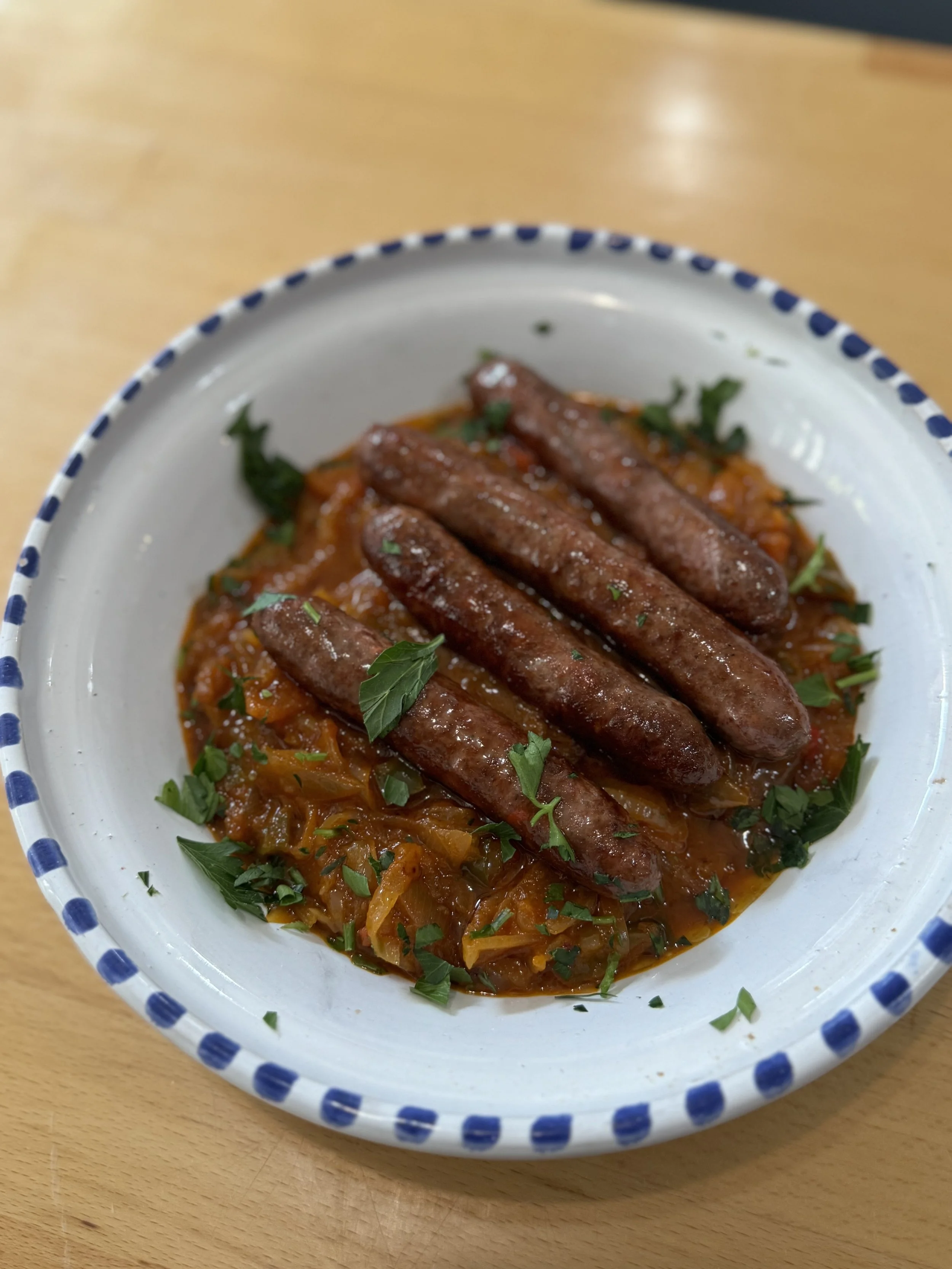
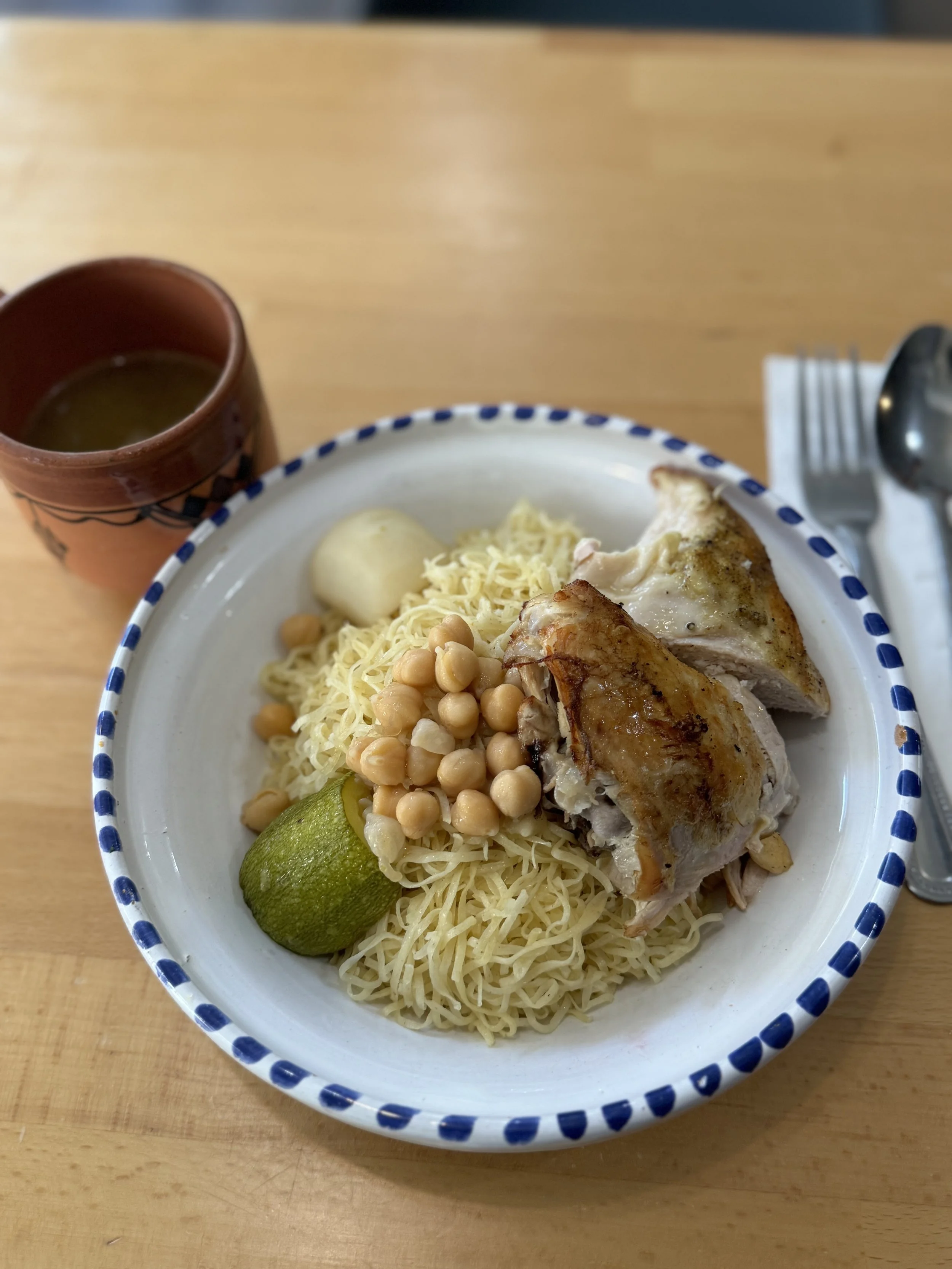
Next up on the menu, Rechta- an impossibly light pasta adjacent dish made simply using semolina flour, water, and salt. Their version is served with chicken and some seasonal vegetables. Then came chakchouka, which sparked a whole other conversation. At first glance, it sounds and looks very familiar to anyone who grew up eating shakshouka in the Levant. Tomatoes, peppers, onions, comfort. Here, it is served with merguez instead of eggs. The sausage comes from a local butcher in Astoria, Halim explained. He also mentioned that it’s a dish typically eaten for lunch in Algeria.
He laughed telling me that customers constantly ask to add eggs, which they will do.
The deeper we got into conversation, the more it became obvious that the food at Kasbah Cafe is tied to seasonality and locality. Amina explained that in Algeria, food is deeply regional becuase historically everything came from nearby farms and local production. You cooked with what was available around you. Chakchouka, for example, is traditionally eaten in the summer because that is when the vegetables are in season.
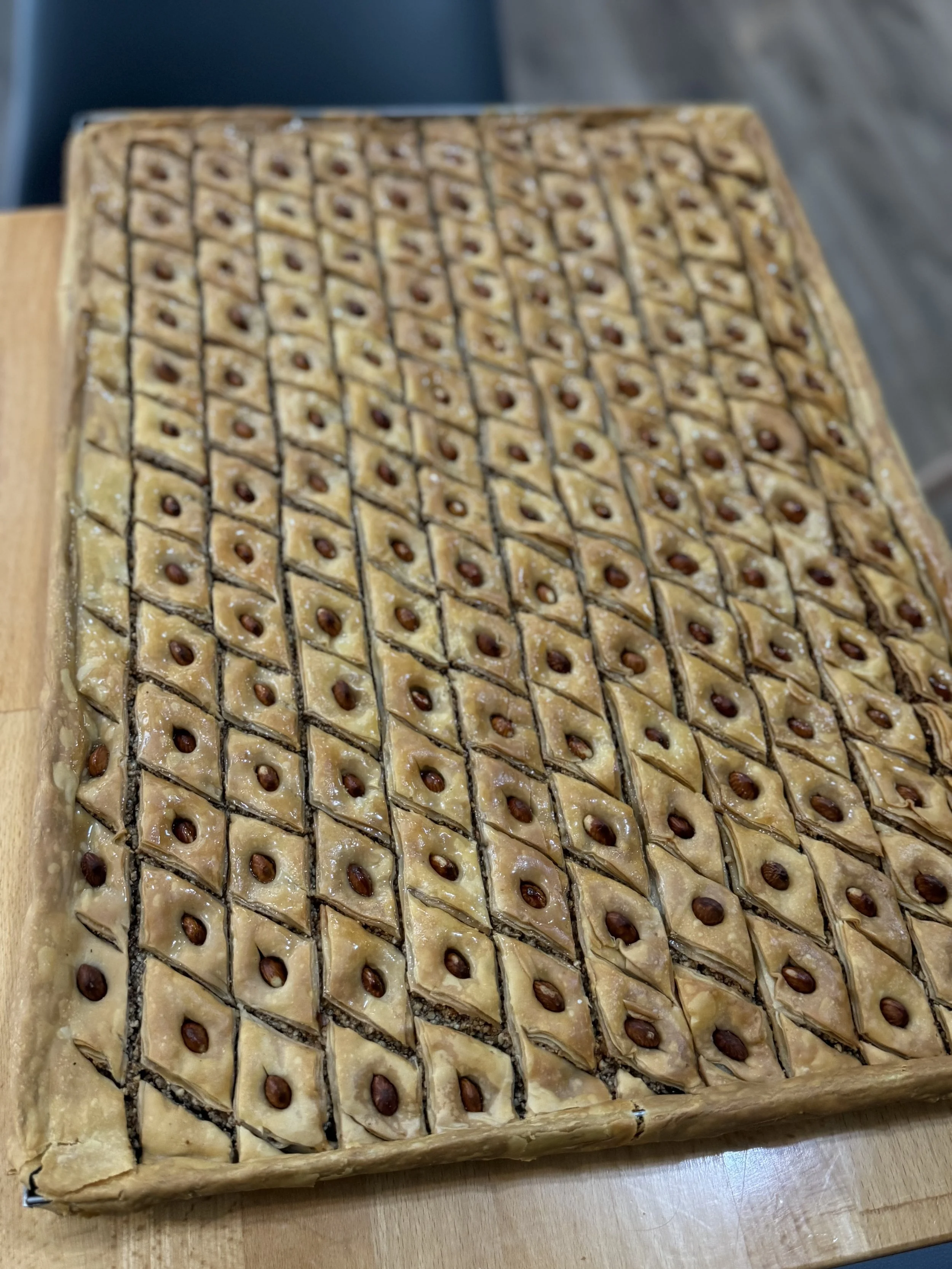
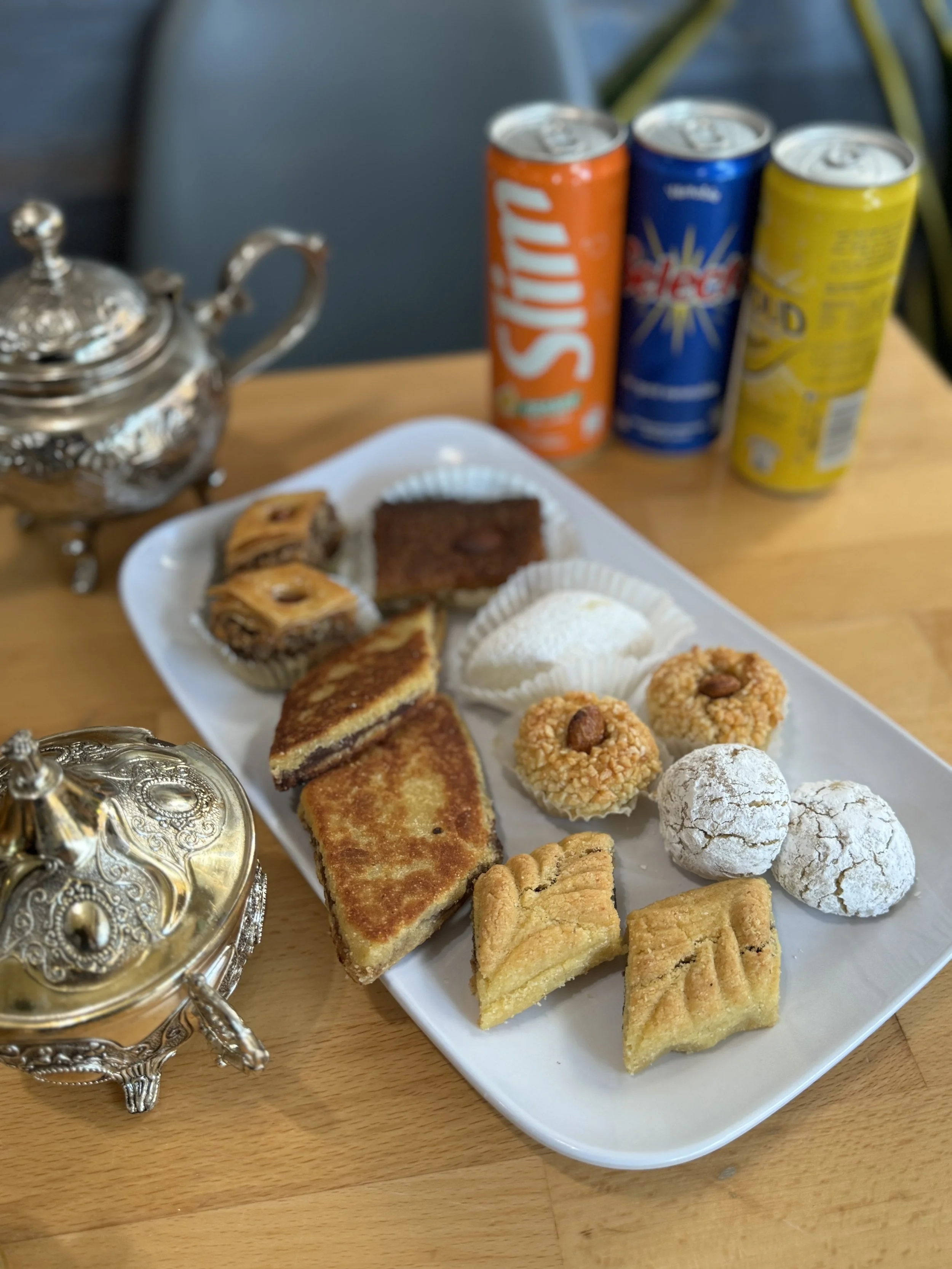
At some point, Amina disappeared into the kitchen and reemerged with what looked like enough dessert to feed an entire wedding. Huge trays of handmade sweets, including baklava that took her three hours to make, with the dough prepared the night before. She assembled an entire dessert platter for me alongside some fresh tea, and I teared up a little sitting there because it reminded me deeply of the generosity embedded in Arab culture- the kind where feeding someone is instinctive, where people keep placing things on the table despite you claiming you’re too full to take another bite. But you do anyways.
It made me realize how much I’ve missed that living in New York, and why finding spaces like this really matters so much. They become more than just restaurants. They become little anchors of familiarity. Little pieces of home.
At one point, Halim said something that stuck with me:
“This is more than a restaurant. It’s an Algerian education spot. An Algerian museum”
And honestly, that is what it feels like. A place where you come to experience a culture authentically, the way it’s actually lived and shared around a table. And whether you grew up eating Algerian food or are tasting it for the first time, Kasbah Cafe has a way of making you equally welcomed in- like there is always room for one more person at the table.